page viii. The Aboriginal Civil Rights Movement
Aboriginal people have always been fighting for our civil rights, but have been seen negatively in the eyes of the general public. The legal term Terra Nullius was only overturned in 1992, in the historic Mabo Decision, which also led to the Native Title Act (1993) and recognition of land ownership to Indigenous people. Aboriginal people got our right to citizenship and right to vote long after other Australians. When the British settled on Indigenous land, there were no treaties or agreements like that which is common throughout history.
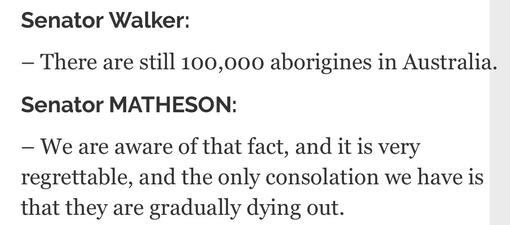
Western Australian Senator Alexander Matheson, Commonwealth Parliamentary debates, Senate, 22 May 1901.
Even today, Aboriginal people are still fighting for a Treaty.
On 26th January, 1928, the Australian Aborigines' League and the Aborigines Progressive Association refused to participate in the sesquicentenary celebrations (150 years) including a re-enactment of the First Fleet's landing. The event organisers wanted Aboriginal people to take part in the re-enactment but because Aboriginal people living in Sydney refused, instead, the organisers brought in Aboriginal men from Menindee in western New South Wales. The men were told to run up the beach away from the British, even though this was not what really happened when the British landed in 1788.
These Lobby groups assembled in conference at the Australian Hall, Sydney, declaring the date the Day of Mourning. This event was organised by prominent Aboriginal civil rights activists Jack Patten and William Ferguson, along with other activists.
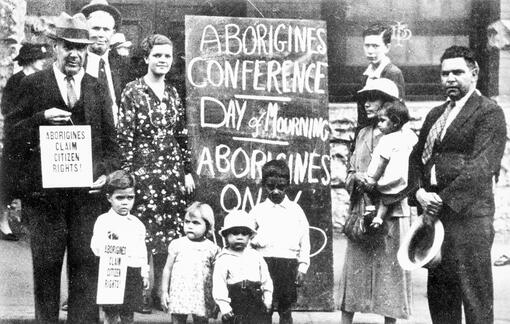
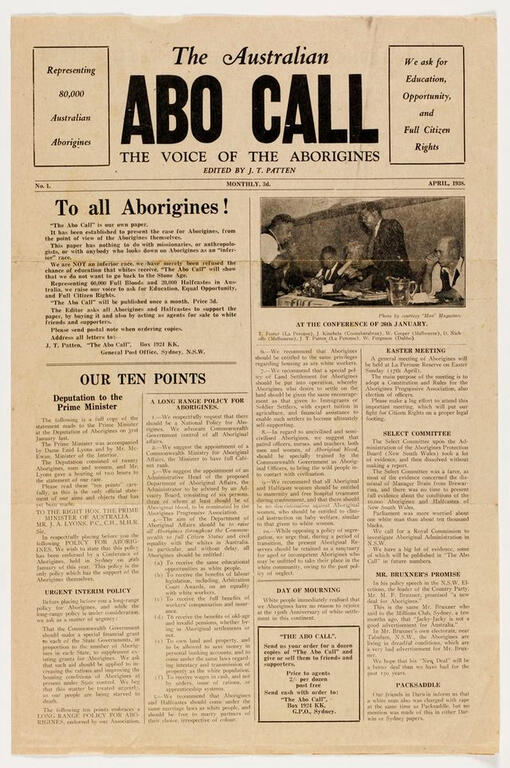
Jack Patten, a Yorta Yorta man born on the Cummeragunja Mission was an important name in the fight for Aboriginal civil rights. Along with Wiradjuri man William Ferguson, they founded the Aborigines Progressive Association in 1937, and in 1938 he published the first Aboriginal newspaper.
Aboriginal people were not allowed to enlist in the military, and often had to conceal their identity if they wanted to serve. In 1939, Patten successfully campaigned to have the rules changed, before enlisting in the army himself. He went on to serve in Palestine and Egypt as a private, until a piece of shrapnel damaged his knee. After serving, six of his children were taken by the Aboriginal Protection Board, and he was only able to successfully secure the release of his son.
next page
page ix. Flags and Their Meanings
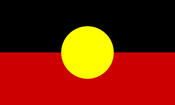
Meaning of the Aboriginal Flag
symbolises the Aboriginal people
represents the sun, the constant renewer of life
represents the earth and the colour of ochre used in Aboriginal ceremonies
Meaning of the Torres Strait Islander Flag
represents the land
represents the sea
represents the Torres Strait Islander people
The centre of the flag shows a white dhari (dancer's headdress) and is a symbol for all Torres Strait Islanders.
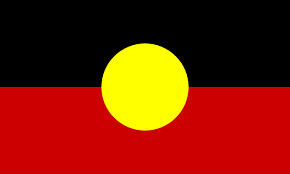
Aboriginal Flag

Torres Strait Islander Flag
next page
page x. More To Read
'Fun' Fact: Did you know Aboriginal Australians and Torres Strait Islanders don't have our own flag emoji, just like many Indigenous people across the world? Many Aboriginal people use this symbol -> [-o-] (meant to look like the flag) or the colours of our flags, such as 🖤💛❤️ or 💚🖤💙🤍💙🖤💚.

home